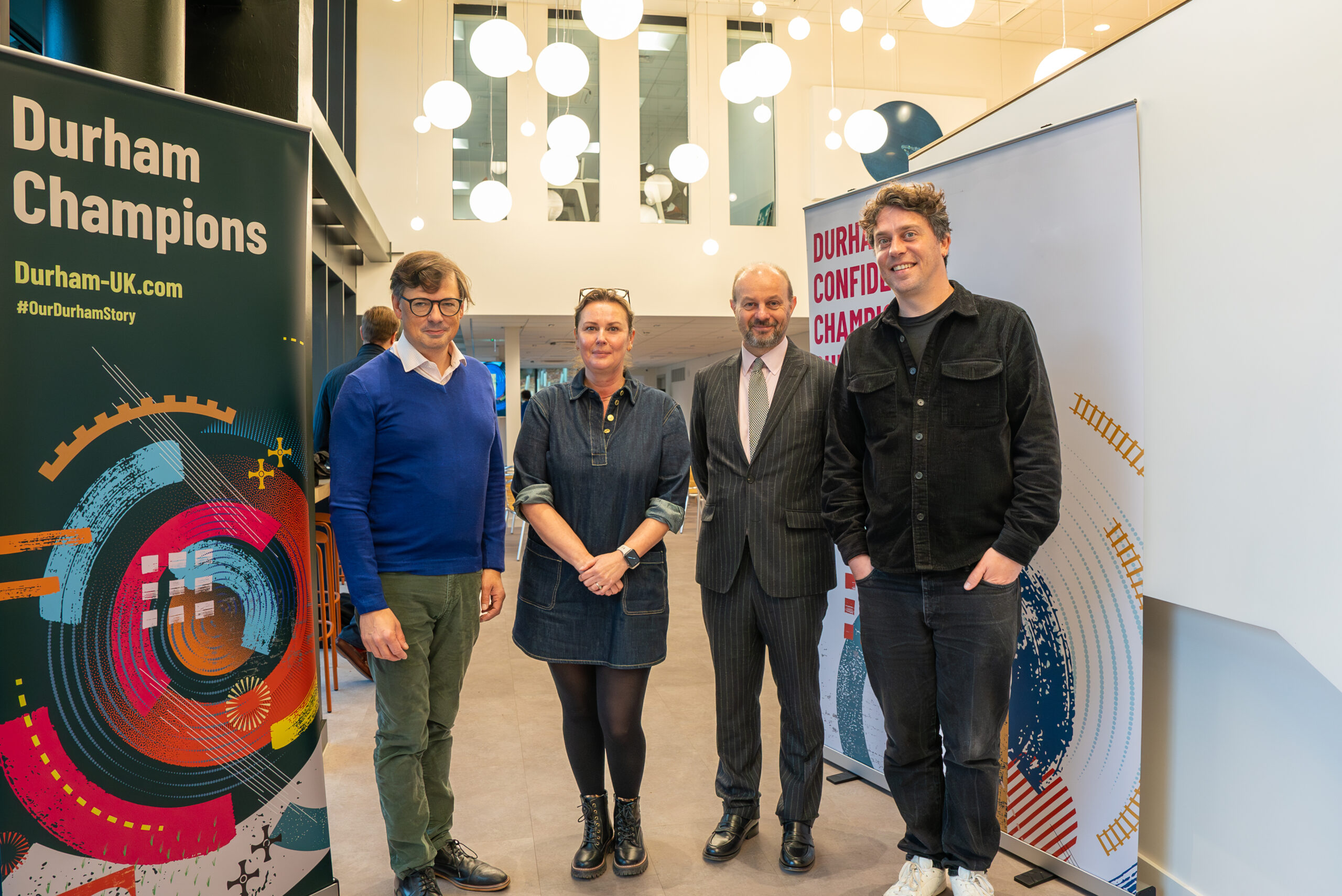
Our Durham Story continues to gain momentum as partners from across the county gathered for the latest Durham Champions event at The Light.
The event, which took place this week, brought together ambassadors committed to sharing the Durham Story, through an exciting new ‘Team Durham’ approach to raising the county’s profile and appeal with key audiences essential for the economic success of the place.
The event brought to life one of the four chapters of the Durham Story – A special city that attracts and radiates, with the audience hearing about exciting developments and success stories first-hand from speakers who are leading them.
Tony Guillan, Artistic Director of The Light, opened the session by highlighting the regional and international significance of the county’s newest world-class cultural venue.
Year of the Normans 2027, the global celebration and opportunity for the county was then discussed by Giles Gasper, Professor in High Medieval History at Durham University.
And the final speaker, Katie Strachan, Film Office Manager at North East Screen shared the county’s screen industry success, the growth of the sector and how businesses can get involved.
Jonathan Moreland, Managing Partner at long-standing Durham-City based law firm Swinburne Maddison chaired the event: “As a proud Durham business and Durham Champion I was delighted to be asked to chair the latest meeting. What really stood out was the passion people have for our county. The audience was made up of businesses, organisations and individuals who have given up their time to support the county, as they want to play their part in its success, and that’s a really powerful thing.
Durham City plays a pivotal role in attracting visitors, relocators, businesses and investment to the county as a whole. And having the opportunity to highlight that part of the Durham Story through some of the incredible things that are happening was truly inspiring.”
The Durham Champions programme places people at its heart, empowering stakeholders from across sectors to become advocates for the county. As the session closed, attendees were encouraged to continue spreading the word, using #OurDurhamStory on social channels, to help further build the county’s image, identity and reputation as a great place to live, work, invest, visit and study.
The next Durham Champions meeting will take place in January, with further details to be announced soon.
Register as a Durham Champion and sign up for the Durham Story e-newsletter.